



Skip to content
Mythology Story | Unveiling Ancient Legends & Modern Meanings

Mythology Story | Unveiling Ancient Legends & Modern Meanings

  • Home
  • Mythical Figures
  • World Mythology
    • Greek & Roman
    • Norse
    • Egyptian
    • Eastern
  • Myth & Modern Life
  • Symbolism & Meanings
  • Toggle search form
  • Odysseus as the Master of Two Worlds
    The Odyssey Meaning: Odysseus as the Master of Two Worlds Greek & Roman
  • Mawu: West Africa's Supreme Goddess of Creation, Compassion, and Cosmic Balance
    Mawu: West Africa’s Supreme Goddess of Creation, Compassion, and Cosmic Balance World Mythology: Legends from Every Corner of the Earth
  • Sophocles: The Life, Works, and Modern Echoes of the Tragic Master
    Sophocles: The Life, Works, and Modern Echoes of the Tragic Master Mythical Figures: Gods, Heroes & Legendary Creatures
  • Izanagi: A God’s Sorrow and Creation.
    Izanagi: A God’s Sorrow and Creation. Eastern
  • Knowing God – Pan: Why Is He Often Depicted Holding a Flute?
    Knowing God – Pan: Why Is He Often Depicted Holding a Flute? Greek & Roman
  • Odin's Ravens: The Secrets of Huginn and Muninn
    Odin’s Ravens: The Secrets of Huginn and Muninn Mythical Figures: Gods, Heroes & Legendary Creatures
  • Geb | Earth God, Sky God, and Creator God Explained
    Geb | Earth God, Sky God, and Creator God Explained Egyptian
  • Benzaiten: Japan’s Goddess of Love, Music, and Fortune
    Benzaiten: Japan’s Goddess of Love, Music, and Fortune World Mythology: Legends from Every Corner of the Earth

Udjat: The Meaning, Mythology, and Mathematics of the Eye of Horus

Posted on 23/01/202627/01/2026 By Sienna Rhodes No Comments on Udjat: The Meaning, Mythology, and Mathematics of the Eye of Horus
Udjat: The Meaning, Mythology, and Mathematics of the Eye of Horus

Table of Contents

Toggle
  • An Exploration Born of Curiosity.
  • Mythological Origins: A Tale of Divine Vengeance and Restoration.
  • Beyond the “Eye”: A Deep Dive into the Symbolic System.
  • Unexpected Discovery: Mathematical Codes Within a Single Eye.
  • That missing 1/64 hides divine magic.
  • From Faith to Function: Ancient Egyptians’ “Visual Calculator”
  • Conclusion: One Symbol, Multiple Wisdoms.

An Exploration Born of Curiosity.

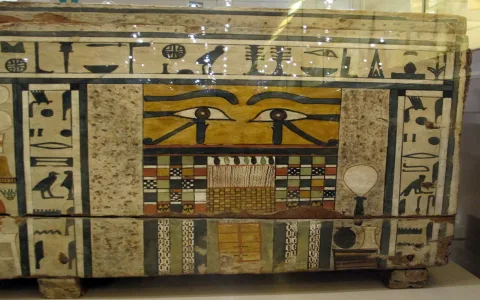
Recently, I’ve developed a deep fascination with ancient Egyptian culture—not for academic research, but because I’m utterly captivated by its enigmatic symbols. Among them, the Eye of Horus (also known as the Udjat) stands out, appearing frequently on artifacts, jewelry, and even modern designs. Yet most people regard it merely as a talisman, rarely delving into its intricate meanings. I began to wonder: What does this eye truly represent? Does every detail hold significance?

Mythological Origins: A Tale of Divine Vengeance and Restoration.

The story of the Udjat is rooted in ancient Egypt’s most famous divine conflict. After Set murdered and dismembered his brother Osiris, Osiris’s son Horus rose to seek vengeance. In the fierce battle, Set gouged out Horus’s left eye.

But this was not the end. Thoth, the god of wisdom and magic (sometimes the goddess Hathor), intervened, piecing the shattered eye back together and restoring it. The rebuilt eye not only restored Horus’s sight but was also offered to his father Osiris in the underworld, providing the vital energy needed for his rebirth.

This act endowed the Ujat with multiple meanings: it symbolized healing, represented sacrifice and devotion, and became a sacred amulet connecting the living and the dead.

Beyond the “Eye”: A Deep Dive into the Symbolic System.

The Udjat is not an ordinary human eye but a sacred totem incorporating the features of a falcon’s eye—the falcon being Horus’s incarnation. Each part carries specific symbolism:

  • Protection and Health: Its most common use was as an amulet to ward off evil, with people wearing Udjat talismans to ward off disease and misfortune.
  • Wholeness and Order: The restored eye symbolizes the integrity of the body and the cosmos, echoing the core Egyptian concept of “Ma’at”—the harmonious justice that should govern the universe.
  • Sun, Moon, and Sovereignty: The left eye (Udjat) is associated with the moon, governed by Thoth; the right eye (Eye of Ra) represents the sun. Together, they form the cosmic powers essential to pharaonic rule.
Udjat: The Meaning, Mythology, and Mathematics of the Eye of Horus

Unexpected Discovery: Mathematical Codes Within a Single Eye.

What truly astonished me was the astonishing connection between the Udjat and the ancient Egyptian measurement system.

In distributing dry goods like grain and beer, the ancient Egyptians used a basic unit of volume called the “heqat.” The six components of the Udjat precisely correspond to fractions of the heqat:

ComponentLocation on UdjatFraction (of 1 Hekat)
The eyebrow (or top curl)Top1/8
The pupilCenter1/4
The inner corner (near nose)Horizontal line on the right1/2
The outer corner (tear mark)Tear line leading down1/16
The cheek line (vertical mark)Vertical line below the eye1/32
The diagonal mark (lower coil)Coiled line extending left1/64

Adding these fractions yields 63/64—not a whole unit. At first, I thought I’d miscalculated, but repeated checks confirmed: the ancients truly “missed a piece.”

That missing 1/64 hides divine magic.

This “incomplete” answer puzzled me until I revisited the myth’s details: Thoth magically restored Horus’s eye. In other words, the physically drawable portion accounted for only 63/64, while the final 1/64 represented magical power beyond visual expression—a trace of divine intervention, faith supplementing reason.

This transcends mere mathematics; it is philosophy: true wholeness requires dimensions beyond the visible world.

From Faith to Function: Ancient Egyptians’ “Visual Calculator”

These fractions weren’t theoretical abstractions. Archaeological evidence shows ancient Egyptians would directly depict portions of the ujat in medical prescriptions or granary records to denote specific dosages. For example:

  • Need 1/4 hekat of herbs? Draw the pupil.
  • Allocating 1/8 hekat of grain? Draw an eyebrow.

This practice transformed religious symbols into efficient visual measurement tools, preserving sacredness while enhancing utility. Myth and daily life merged seamlessly here.

Conclusion: One Symbol, Multiple Wisdoms.

The udjat was far more than decoration or amulet. It is a sophisticated system integrating mythological narratives, cosmology, mathematical logic, and practical living. Through a single eye, the ancient Egyptians told a complete story of trauma, healing, order, and faith—and that “unseen 1/64th” may be their most profound legacy: Perfection sometimes lies precisely in acknowledging imperfection and believing in a power that transcends it.

Recommended reading: The Most Revered Deities in Hinduism: Vishnu, Shiva, and Devi

Egyptian, Symbolism & Meanings: Decoding the Language of Myths Tags:Thoth, Udjat

Post navigation

Previous Post: Odin’s Ravens: The Secrets of Huginn and Muninn
Next Post: Sophocles: The Life, Works, and Modern Echoes of the Tragic Master

Related Posts

  • Geb | Earth God, Sky God, and Creator God Explained
    Geb | Earth God, Sky God, and Creator God Explained Egyptian
  • Juniper Tree Spiritual Meaning: Protection, Purification, and Ancient Wisdom
    Juniper Tree Spiritual Meaning: Protection, Purification, and Ancient Wisdom Symbolism & Meanings: Decoding the Language of Myths

Leave a Reply Cancel reply

Your email address will not be published. Required fields are marked *

Archives

  • February 2026
  • January 2026

Categories

  • Eastern
  • Egyptian
  • Greek & Roman
  • Myth & Modern Life: Names, Pop Culture & Branding
  • Mythical Figures: Gods, Heroes & Legendary Creatures
  • Norse
  • Symbolism & Meanings: Decoding the Language of Myths
  • World Mythology: Legends from Every Corner of the Earth

Recent Posts

  • Knowing God – Pan: Why Is He Often Depicted Holding a Flute?
  • Izanagi: A God’s Sorrow and Creation.
  • The Legend of the Phoenix – From Greek Mythology.
  • The Odyssey Meaning: Odysseus as the Master of Two Worlds
  • Apollo: The Greek God of Light, Music, Prophecy, and More
  • Sun Wukong: The Mythology, Origins, and Legend of the Monkey King
    Sun Wukong: The Mythology, Origins, and Legend of the Monkey King Eastern
  • Chinese Goddess of Love Names: Discover the Different Titles She Holds
    Chinese Goddess of Love Names: Discover the Different Titles She Holds Eastern
  • Benzaiten: Japan’s Goddess of Love, Music, and Fortune
    Benzaiten: Japan’s Goddess of Love, Music, and Fortune World Mythology: Legends from Every Corner of the Earth
  • Odin's Ravens: The Secrets of Huginn and Muninn
    Odin’s Ravens: The Secrets of Huginn and Muninn Mythical Figures: Gods, Heroes & Legendary Creatures
  • Knowing God – Pan: Why Is He Often Depicted Holding a Flute?
    Knowing God – Pan: Why Is He Often Depicted Holding a Flute? Greek & Roman
  • Meeting Cerridwen: Finding True Transformation through Shadow Work and the Cauldron of Inspiration
    Meeting Cerridwen: Finding True Transformation through Shadow Work and the Cauldron of Inspiration Mythical Figures: Gods, Heroes & Legendary Creatures
  • Juniper Tree Spiritual Meaning: Protection, Purification, and Ancient Wisdom
    Juniper Tree Spiritual Meaning: Protection, Purification, and Ancient Wisdom Symbolism & Meanings: Decoding the Language of Myths
  • Geb | Earth God, Sky God, and Creator God Explained
    Geb | Earth God, Sky God, and Creator God Explained Egyptian

Powered by Mythology Story , About Us


sitemap