


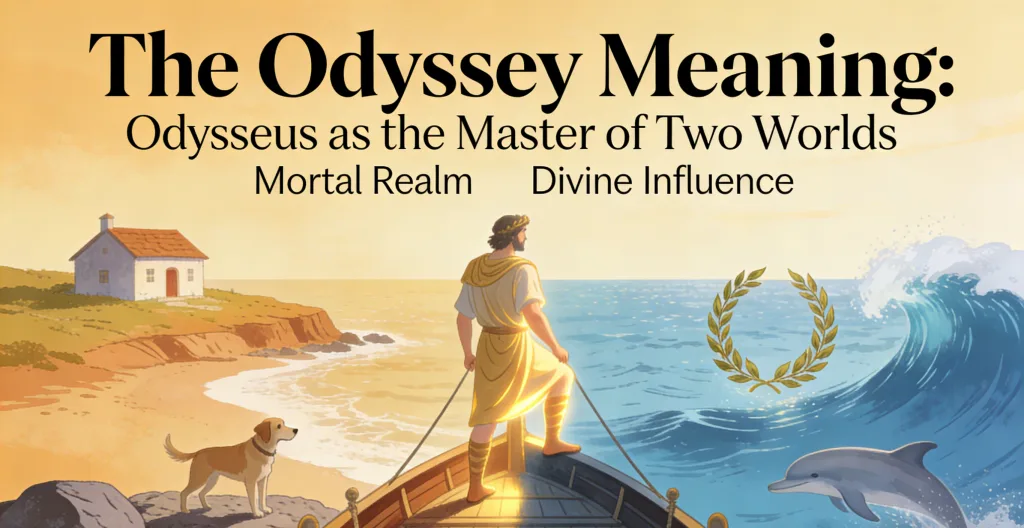
Have you ever wondered what truly makes a hero great? Is it brute strength? Or the ability to slay monsters? In the ancient Greek epic The Odyssey, the story of its protagonist Odysseus reveals that a true hero is someone who can seamlessly navigate between “two worlds.”
Sounds a bit abstract, right? Don’t worry, let’s break it down.
What Are the “Two Worlds”?
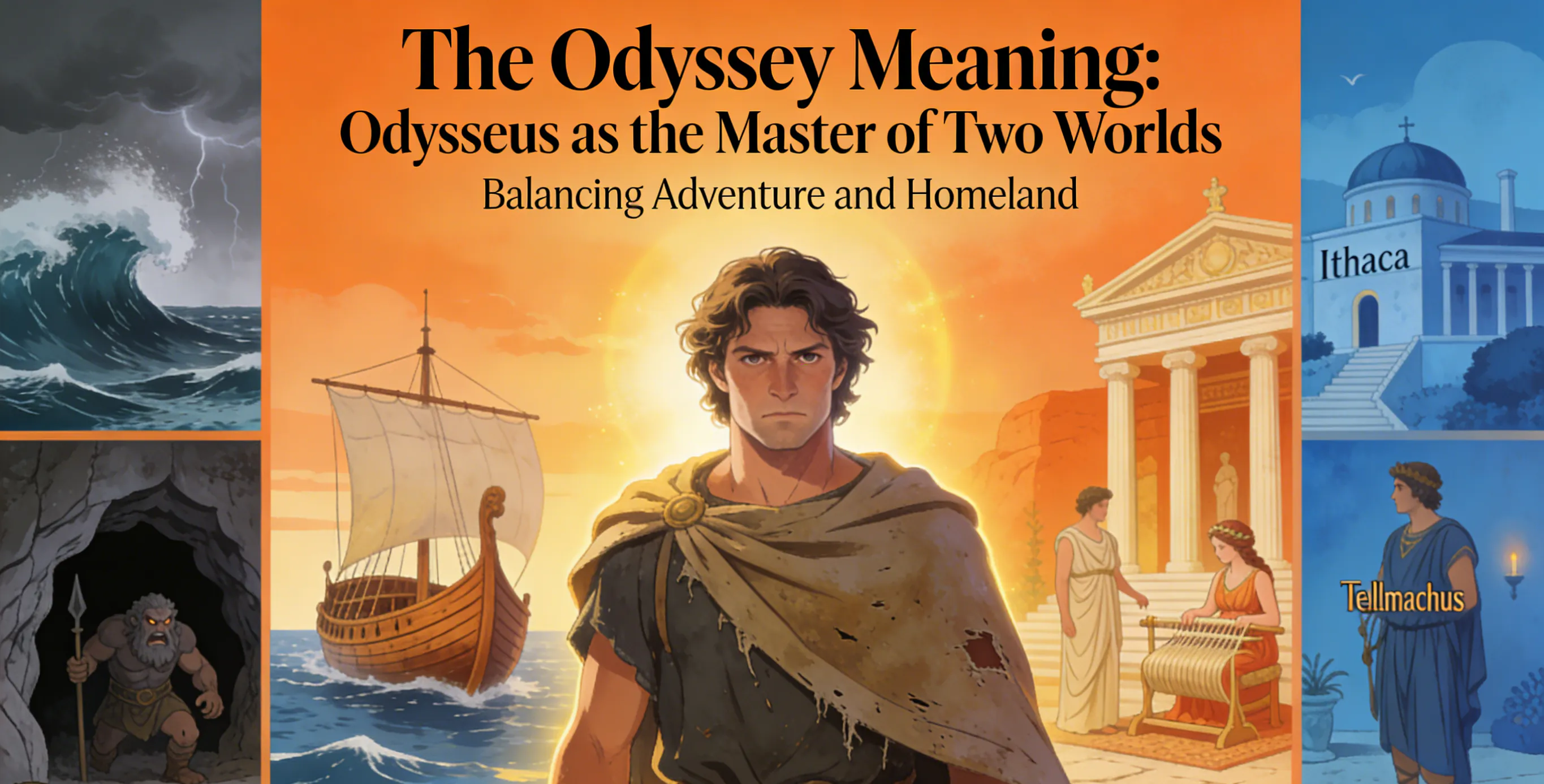
Simply put, the first world is the one we ordinary people inhabit. It has homes, jobs, worries, and responsibilities. For Odysseus, this world was his homeland—the island of Ithaca. He was a king, with a wife, Penelope, a son, and a mountain of state affairs awaiting his attention.
The second world is entirely different. It’s a realm filled with magic, monsters, and gods. On his journey home, Odysseus spent a full decade navigating this “fantasy world.” He encountered cyclopes, was turned into a pig by a witch, and even descended into the underworld to converse with the dead. This world is dangerous and thrilling, brimming with adventures beyond mortal imagination.
Mythologist Joseph Campbell summarized this hero’s journey as “master of two worlds.” It means the hero not only survives the fantastical realm but also brings back lessons learned there to improve their real life.
This makes me think heroes don’t always have it easy, right?
Why Did Odysseus Reject Immortality?
Honestly, I used to think heroes were supposed to escape forever—to find some magical place where nothing hurts, nothing ends.
The pivotal moment of Odysseus’ journey occurred on the island of the goddess Calypso. She fell in love with him and offered him immortality—eternal youth and freedom from all troubles. Isn’t that the life many dream of?
Yet Odysseus refused. Why? Because he understood that true meaning didn’t lie in that perfect “second world,” but precisely in his troublesome “first world”—Ithaca. He knew that even with aging, death, and countless frustrations, that was where he truly belonged. His home, his identity, his responsibilities—all were there.
You see, he didn’t prove his greatness by defeating the goddess. Instead, he demonstrated his mastery by choosing to leave—by showing he had truly seen through that fantastical realm. That is true “mastery.”
How Did Odysseus Rule as King After Returning Home?
Back in Ithaca, Odysseus didn’t rush to reveal his identity. Disguised as a beggar, he secretly observed his home. The suitors who had harassed his wife and squandered his provisions daily during his absence never suspected this “filthy old man” was the king himself.
He employed the skills honed in the “second world”: patience, disguise, and Trojan Horse-style stratagems. He was no longer the young warrior-king, but a thoughtful, patient sage.
In the end, he successfully eliminated all the villains, reunited with his wife, and restored peace to his kingdom. He applied the wisdom gained in the Underworld and the cunning honed at sea to solve real-world problems.
Good heavens, just imagine—if he had stayed on the goddess’s island to enjoy his leisure, who knows what chaos would have engulfed Ithaca by now!
So you see, the greatness of Odysseus lies not in the number of wondrous places he visited, but in his ability to transform those extraordinary experiences into the strength to govern a nation and protect his family. He could survive Poseidon’s storms and navigate the politics of his own hall. This is the true “master of two worlds”—a complete man who seamlessly blended the identities of adventurer and king.