


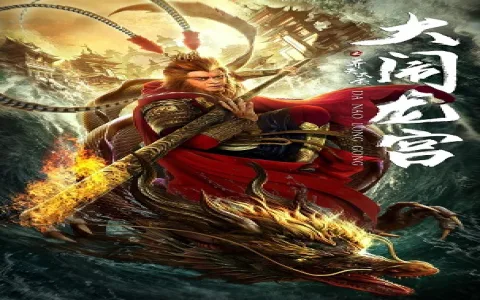
Lately, I’ve been utterly captivated by Black Myth: Wukong. Honestly, among all mythological figures, none haunts my dreams quite like Sun Wukong. To truly understand him, I spent half a year not only rereading classic chapters of Journey to the West but also tracing his origins—where did this defiant, mighty monkey truly come from? This journey of discovery proved far deeper and more moving than I ever imagined. Today, I want to share my findings with you.
I. The “Non-Human” Hero Born from Stone
Sun Wukong’s very birth is steeped in the divine. He was not born of parents, but burst forth from a mystical stone on Flower-Fruit Mountain, nurtured by the essence of heaven and earth. This “parentless” origin destined him to belong neither to the mortal world nor entirely to the divine realm.
- Birth from Stone: This is more than a fantastical setting; it symbolizes his connection to the primordial source of the universe—primitive, free, and unbound.
- Born Leader: As a young monkey, he led his troop to conquer the Water Curtain Cave, crowning himself the “Monkey King.” Later, seeking immortality, he journeyed across the seas to become a disciple of Patriarch Subodhi, mastering both martial and scholarly arts with ambitious drive.
II. Was He Indian in Origin or Native to China?
Scholars have long debated Sun Wukong’s origins. After reviewing extensive materials, I found both major theories compelling:
- Hanuman Theory: Some trace him to Hanuman, the divine monkey from India’s Ramayana epic—equally mighty, cloud-riding, and fiercely loyal. This image may have traveled along the Silk Road as Buddhism spread eastward.
- Indigenous Origin Theory: Others point to Tang Dynasty legends featuring monkey spirits like “White Ape Lord” and “Yuan Gong,” even noting the “Five-Fingered Water Demon” from the Huai River basin resembling a monkey spirit. Perhaps Wukong emerged from the fusion of multiple folk beliefs.
To me, regardless of his origins, he has long been a uniquely Chinese cultural icon.
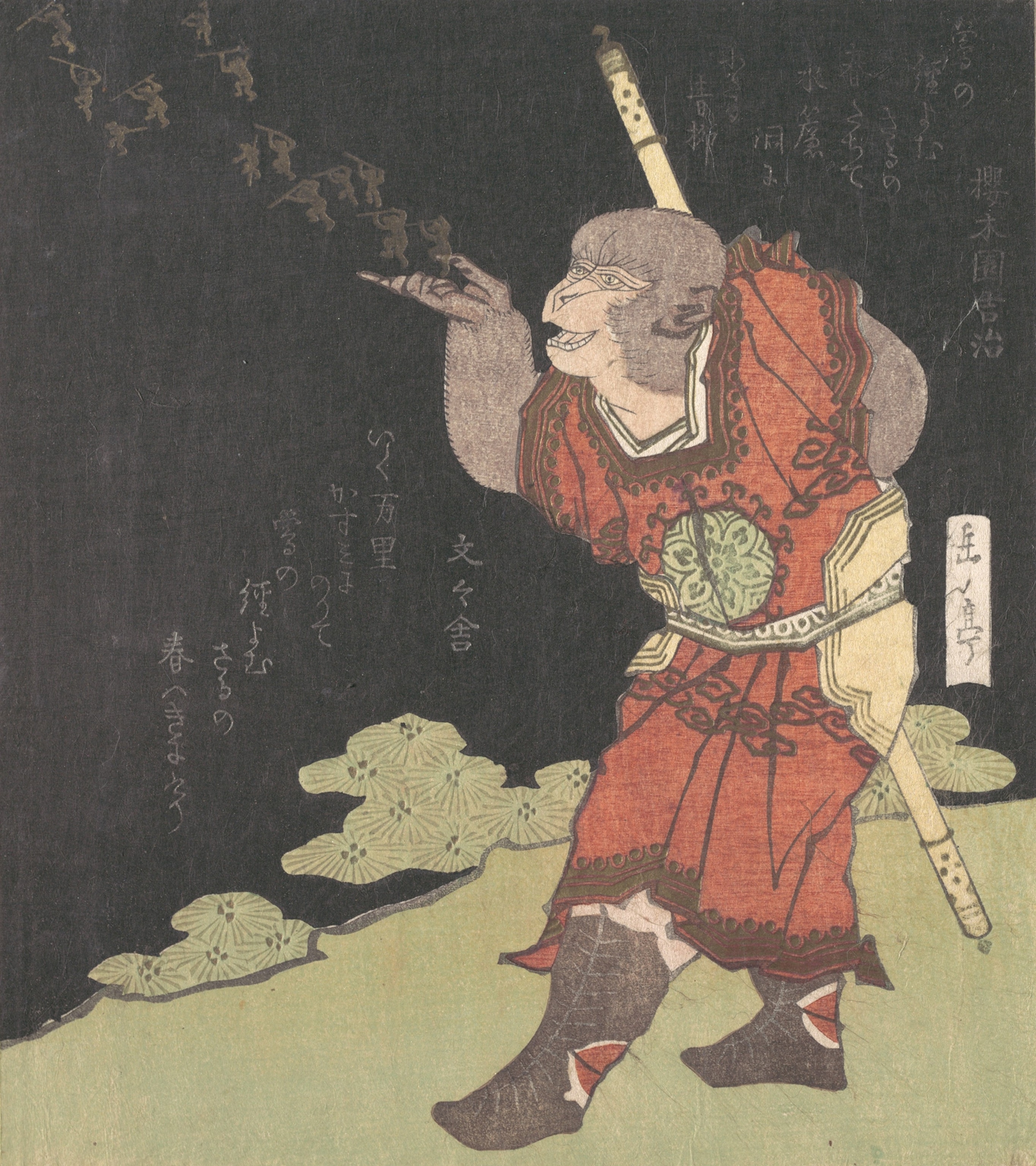
III. The Name “Wukong”: An Irony of Destiny
His name was personally bestowed by Patriarch Subhuti: “Sun” (孙) sounds like “monkey” (狲) and also implies “new offspring”; while ‘Wukong’ (悟空) directly points to Buddhism’s core teaching—the realization that “all phenomena are empty.”
Consider this: a fierce monkey who rampages through heaven and earth, causing chaos in the celestial court, is given a name meaning “to see through the void.” It’s a brilliant irony and the deepest foreshadowing.
From a proud king pursuing immortality to a practitioner who, after enduring trials, lets go of his attachments—the name “Wukong” foretold his entire life.
IV. Supernatural Powers Were Not Innate, But “Stolen”
Wukong’s strength never fell from the heavens. His signature abilities were almost entirely acquired through audacity, cunning, or outright “theft”:
- The Cloud of Ten Thousand Li: A single somersault carries him 108,000 li, outpacing even celestial soldiers.
- Invulnerable to Wounds: He broke into the Supreme Elder Lord’s alchemy chamber, gobbling down immortal pills like candy, and became impervious to blades, bullets, water, and fire.
The Ruyi Jingu Bang (Golden-Hooped Rod): A Symbol of Rebellion
Originally the “Sea-Stabilizing Divine Needle” used by Yu the Great to measure ocean depths during flood control, this staff weighs 13,500 jin yet shrinks or expands at will—small enough to fit in an ear like an embroidery needle, yet large enough to prop up the heavens or support the earth.
It is not merely a weapon, but Sun Wukong’s declaration of defiance against authority. When he “borrowed” this treasure from the Dragon Palace of the East Sea, he had effectively declared war on the entire Heavenly Court.
The Dragon Palace Trio: More Than Gear, a Coronation of Status
Besides the Golden Monkey Staff, the Dragon King also gifted him a set of attire:
- Golden Chain Mail: Gleaming with gold, it defends against blades and wards off spells;
- Purple-Gold Phoenix-Winged Crown: Not only imposing, it’s said to boost agility and mental resistance;
- Lotus-Thread Cloud-Walking Shoes: Allowing him to traverse clouds as if walking on solid ground, paired with the Cloud-Leaping Technique, truly achieving “Heaven and Earth are mine to roam.”
These artifacts transformed him from a mountain monkey king into the “Great Sage Equal to Heaven.”
V. Mastery of the Dao: Wukong’s Inner Divine Abilities
Beyond physical gear, Wukong’s most terrifying power lies in his “inner divine abilities”:
- Seventy-Two Transformations: Not only can he become birds, beasts, insects, or fish, but also assume others’ forms—even transforming into an entire temple. This isn’t mere disguise, but the ultimate tactic for strategy, reconnaissance, and escape.
- Body-Splitting Technique: Chewing a single hair creates hundreds or thousands of duplicates—a single man becoming an army, utterly awe-inspiring.
- Fire-Eye Golden Vision: After being forged in the Eight Trigrams Furnace of the Supreme Elder Lord for forty-nine days, he gained eyes that pierce through all illusions. Demons and monsters could find no hiding place before him.
VI. The Price of Rebellion: Five Centuries of Mountain-Bottom Contemplation
The greater the power, the harder it is to tame. Sun Wukong crowned himself the “Great Sage Equal to Heaven,” stormed the Celestial Palace, and routed the gods. Yet in the end, the Buddha Sakyamuni pressed him beneath the Five Elements Mountain with but one hand.
Those five hundred years held no battles, no clamor—only silence and reflection.
It was this confinement that taught the once-arrogant monkey to bow his head for the first time, sowing the seeds for his future transformation.
VII. The Journey West: From Guardian to Enlightened One
After being enlightened by Guanyin, he donned the golden headband and became Tang Sanzang’s foremost disciple. Outwardly, he escorted his master on the scripture quest; inwardly, it was a journey of self-redemption.
- The Headband’s Curse: Not punishment, but a reminder. Whenever restlessness stirred within him, the spell sounded like an alarm bell—true power must be reined in by compassion.
- Eighty-One Trials: Each ordeal was a lesson in cultivation. He no longer fought merely to prove his strength, but learned patience, cooperation, and sacrifice.
- Ultimately Becoming the Victor Buddha: On the day the scriptures were obtained, he was no longer the “Great Sage Equal to Heaven,” but the “Victor Buddha”—an enlightened being who harnesses power through wisdom.
VIII. Wukong’s Story Is Actually Our Own
Looking back, I increasingly realize Journey to the West is far from a simple tale of gods and demons.
It tells of one man’s battle against his own “monkey mind”—that restless, arrogant inner ape craving both freedom and belonging.
From lawless rebellion to willingly accepting bonds; from trusting only himself to embracing his destiny.
His journey mirrors each of us: youth yearns to overturn rules, yet true strength lies in choosing to protect after seeing the world clearly.
This is why I’m so captivated by Sun Wukong.
He isn’t a flawless deity, but a “human” who constantly struggles, makes mistakes, and rises again.
If you too are willing to quiet your mind and revisit his story, you might discover—that monkey leaping from the stone has always lived within our hearts.
Recommended reading: Odin’s Ravens: The Secrets of Huginn and Muninn