



As a kid flipping through myth books, I always thought Apollo was just that handsome sun god who drove his golden chariot to work every day… Only to discover as an adult that he does way more than bask in the sun! This guy also plays the lyre, heals the sick, foretells the future, and even had a few heartbreaking romances—he’s practically bursting with responsibilities.
Who Exactly Was Apollo?
Apollo was the son of Zeus, with a twin sister named Artemis (the goddess of the hunt). He wasn’t a one-trick pony deity but a “man of many roles”—musician/healer/prophet/archer… his job description was incredibly diverse.
Many associate him with the sun god, but the original sun deity was Helios, the charioteer who drove the sun across the sky. Later, as Apollo came to symbolize light, truth, and order, people gradually attributed the sun to him too, even giving him the nickname “Phoebus,” meaning “the shining one.” Honestly, when I first learned this, I was a bit confused—was the division of labor among the gods really this chaotic?
What’s in Apollo’s “Toolbox”?
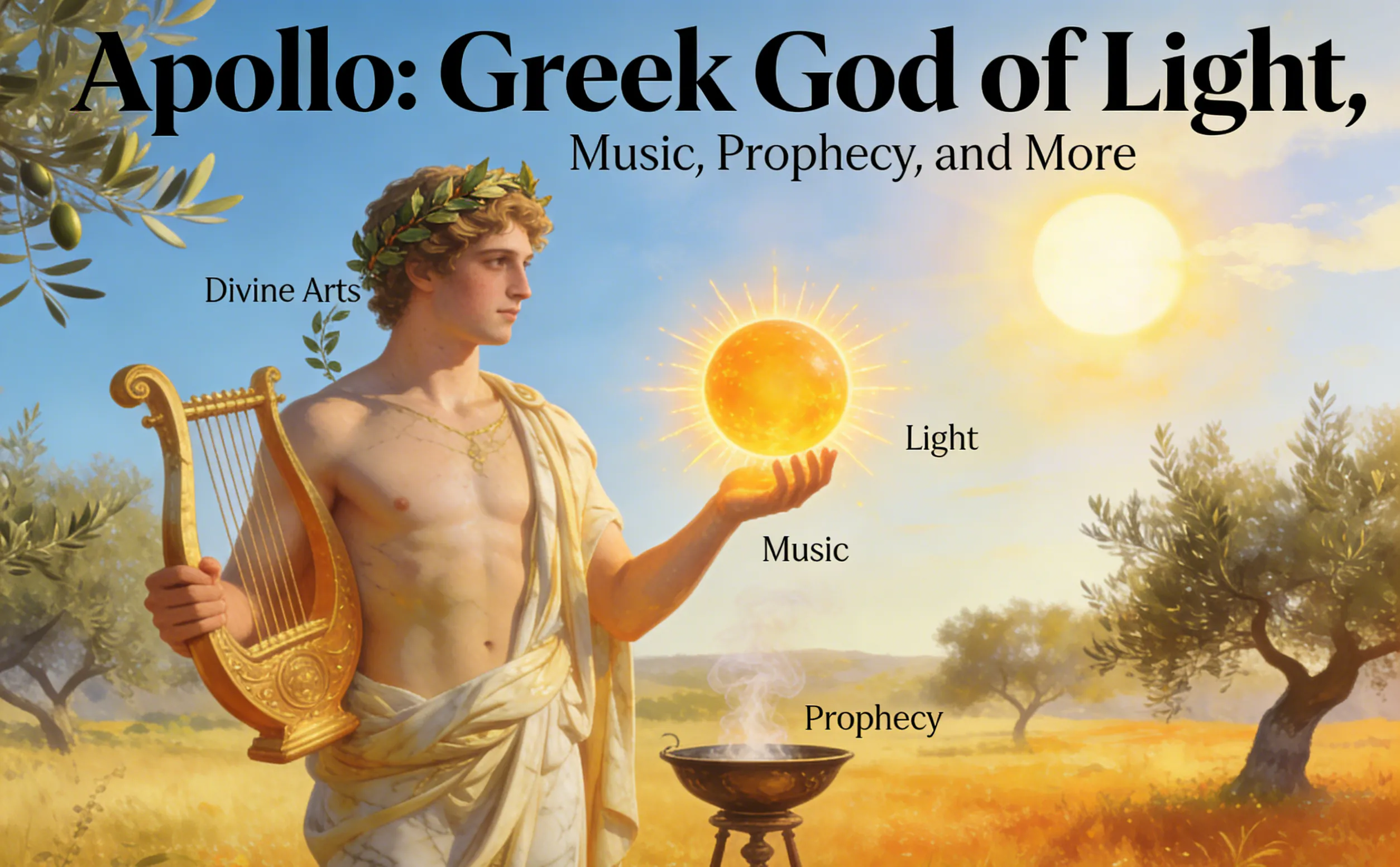
To spot Apollo, just look at his “equipment”: his lyre is his most famous symbol—playing it can calm wild beasts, and he’s also the forefather of poets and musicians; his bow and arrows aren’t just for show—they can spread plagues or cure diseases, making him a classic double agent; Then there’s that laurel wreath—oh right, after failing to win Daphne’s love, she turned into a laurel tree, so he wears her leaves as a hat every day. Pretty devoted, but also pretty tragic. Add in a tripod or a serpent, representing his role as the oracle at Delphi.
His Most Awesome Job: Serving as the “Human-God Mediator.”
Apollo’s true domain was at Delphi, home to that legendary temple housing the priestess Pythia. When ancient Greeks faced major decisions—whether to wage war, farm the land, or choose marriage partners—they flocked there for oracles.
The Pythia would inhale toxic vapors to enter a trance, then utter cryptic oracles that people would painstakingly interpret as Apollo’s words.
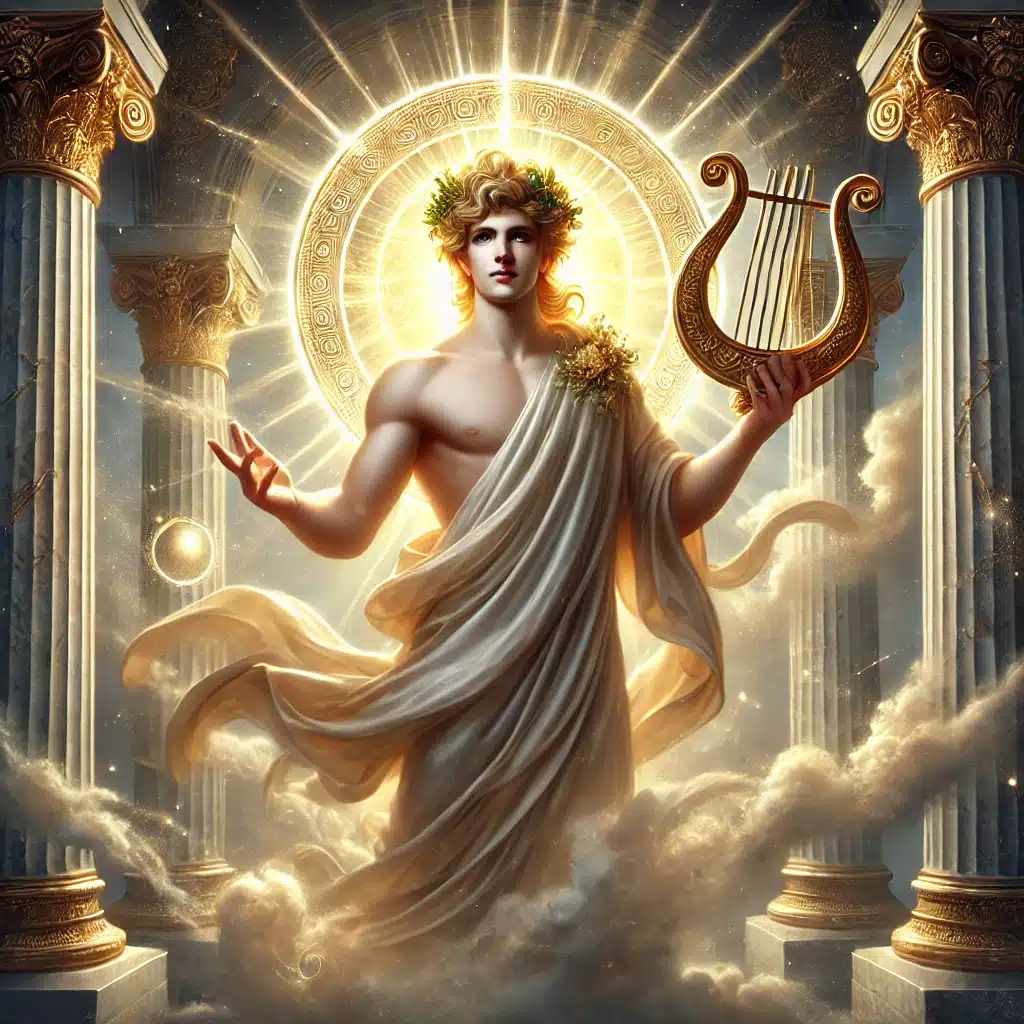
Think of him as the “middleman” or “customer service manager” between Zeus and mortals—Zeus’s thoughts were too profound for humans to grasp, so Apollo served as the translator. Though his translations often left people scratching their heads, they still trusted him. Ha! After all, he was the official channel.
Did Apollo ever “screw up”? Absolutely!
Though Apollo is a god, handsome and talented, he’s a real “unlucky charm” when it comes to love. His romantic tales are almost always tragedies.
- The Unattainable Daphne: As mentioned earlier, she turned into a tree.
- The Cursed Cassandra: He fell for a mortal princess named Cassandra and promised her the gift of prophecy. But after learning it, she changed her mind and wanted nothing to do with him. Apollo was furious, yet unable to take back the gift, so he cursed her: “Your prophecies will be true, but no one will believe them!” This was devastating. Cassandra witnessed disasters unfolding before her eyes, yet no matter how she warned people, no one listened.
He also committed a particularly cruel act. A forest god named Marsyas boasted that his flute playing surpassed Apollo’s lyre playing and insisted on a contest. When Marsyas lost, Apollo, in a fit of rage, flayed him alive. See, even gods can lose their temper.
Apollo embodies a “way of life.”
To the ancient Greeks, Apollo wasn’t just a god—he represented a way of life: order, reason, harmony, and moderation. This stood in stark contrast to Dionysus, the god of wine—one was the diligent student taking notes in class, the other the party animal who never came home on weekends. The Greeks believed it was best to balance both sides, avoiding extremes. In modern terms, it’s like the eternal battle between the bookworm and the social butterfly. Which side do you lean toward?
Even Gods Have to “Work”?
The most intriguing part? Despite his greatness, Apollo was once punished with “community service.” When his son Asclepius (god of medicine) revived the dead, it enraged Hades. To appease the gods, Zeus struck Asclepius dead with a thunderbolt. Consumed by grief and rage, Apollo then slew the Cyclops who forged Zeus’s thunderbolts. As punishment, Zeus ordered Apollo to serve as a slave to the mortal king Admetus for a year.
Even a mighty god must experience human suffering—doesn’t that make him feel suddenly more relatable?
Honestly, a god like Apollo would probably be seen today as that “superstar with mood swings” combo. No wonder he’s been remembered for millennia.