
Skip to content
Mythology Story | Unveiling Ancient Legends & Modern Meanings

Mythology Story | Unveiling Ancient Legends & Modern Meanings

  • Home
  • Mythical Figures
  • World Mythology
    • Greek & Roman
    • Norse
    • Egyptian
    • Eastern
  • Myth & Modern Life
  • Symbolism & Meanings
  • Toggle search form
  • Sophocles: The Life, Works, and Modern Echoes of the Tragic Master
    Sophocles: The Life, Works, and Modern Echoes of the Tragic Master Mythical Figures: Gods, Heroes & Legendary Creatures
  • The Most Revered Deities in Hinduism: Vishnu, Shiva, Devi, and the Unity of the Divine
    The Most Revered Deities in Hinduism: Vishnu, Shiva, Devi, and the Unity of the Divine World Mythology: Legends from Every Corner of the Earth
  • Meeting Cerridwen: Finding True Transformation through Shadow Work and the Cauldron of Inspiration
    Meeting Cerridwen: Finding True Transformation through Shadow Work and the Cauldron of Inspiration Mythical Figures: Gods, Heroes & Legendary Creatures
  • Sun Wukong: The Mythology, Origins, and Legend of the Monkey King
    Sun Wukong: The Mythology, Origins, and Legend of the Monkey King Eastern
  • Apollo The Greek God of Light, Music, Prophecy, and More
    Apollo: The Greek God of Light, Music, Prophecy, and More Greek & Roman
  • Udjat: The Meaning, Mythology, and Mathematics of the Eye of Horus
    Udjat: The Meaning, Mythology, and Mathematics of the Eye of Horus Egyptian
  • Geb | Earth God, Sky God, and Creator God Explained
    Geb | Earth God, Sky God, and Creator God Explained Egyptian
  • The Legend of the Phoenix – From Greek Mythology.
    The Legend of the Phoenix – From Greek Mythology. Greek & Roman

Odin’s Ravens: The Secrets of Huginn and Muninn

Posted on 23/01/202627/01/2026 By Julian Sterling 1 Comment on Odin’s Ravens: The Secrets of Huginn and Muninn
Odin's Ravens: The Secrets of Huginn and Muninn

Table of Contents

Toggle
  • The Profound Meaning Behind the Names.
  • The Daily Flight: Odin’s Intelligence Network.
  • Odin’s Fear: Losing Memory Is More Terrifying Than Losing Thought.
  • From Myth to Metaphor: Odin as the Ancient “Intelligence Chief”.
  • Ravens on the Battlefield: Messengers of Death and Fate.
  • Dualistic Balance: The True Mystery of Wisdom.

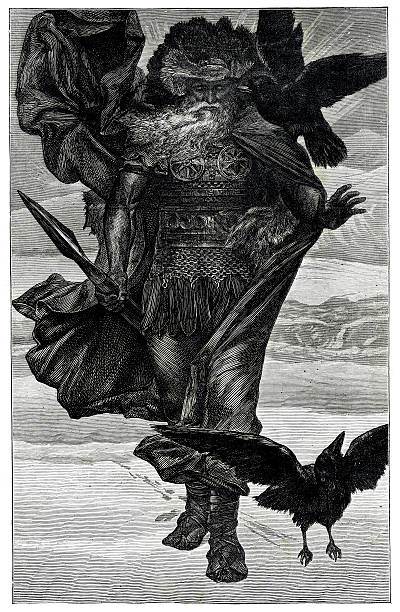
In Norse mythology, Odin, the father of the gods, rarely travels alone—two ravens always perch upon his shoulders: Huginn (thought) and Muninn (memory).

Far from ordinary attendants, they form the core components of Odin’s wisdom system, symbolizing the subtle yet crucial interplay between thought and memory.

The Profound Meaning Behind the Names.

I pored over multiple translations of the Poetic Edda and Prose Edda, paying particular attention to passages describing Odin and his “winged messengers.” I even traced obscure academic papers to unravel the etymology of “Huginn (thought)” and “Muninn (memory).”

“Huginn” derives from the Old Norse hugr, meaning “thought” or “mind”; “Muninn” stems from munr, signifying “memory” or “recall.” This is not mere naming, but a philosophical metaphor.

The Daily Flight: Odin’s Intelligence Network.

Each dawn, Huginn and Muninn take flight across the Nine Realms connected by Yggdrasil, gathering all manner of worldly events—wars, conspiracies, rumors, and oracles. At dusk, they return punctually, perching upon Odin’s shoulders to whisper their observations.

This daily reconnaissance not only sustains Odin’s status as the “All-Seeing One,” but also reveals a deeper logic: true authority stems from sustained and comprehensive perception of reality.

Odin’s Fear: Losing Memory Is More Terrifying Than Losing Thought.

Yet this dependence breeds anxiety. In Grímnismál, Odin himself voices his dread:

“Huginn and Muninn fly every day over the expanse of the world. I fear for Huginn, that he might not return, yet I fear more for Muninn.”

These words carry profound meaning. Losing Huginn (thought) means being unable to acquire new knowledge, leading to stagnation of the mind; but losing Muninn (memory) is even more fatal—it signifies the dissolution of identity, the rupture of history, and the annihilation of experience. For a god whose very being rests on wisdom, memory is the foundation of power.
Odin's Ravens: The Secrets of Huginn and Muninn

From Myth to Metaphor: Odin as the Ancient “Intelligence Chief”.

When I reexamine Huginn and Muninn through a modern lens, an intriguing analogy emerges:

  • Huginn is like a drone: actively scouting, gathering raw data in real-time, providing immediate situational awareness;
  • Muninn functions like a strategic database: storing historical information, providing context and depth for decision-making.

Odin’s other methods of acquiring knowledge—drinking from Mimir’s Well, sacrificing an eye for the Runes of Wisdom—all came at immense cost. Only the two ravens could deliver “live data” to him without ceasing, day after day.

This made me realize Odin doesn’t act solely on mystical intuition. He’s more like a strategist who masters information management: he understands wisdom isn’t a static accumulation of knowledge, but an unceasing dynamic cycle between thought and memory.

Ravens on the Battlefield: Messengers of Death and Fate.

In Norse culture, ravens have always been inextricably linked to war and death, earning them the name “carrion birds.” This further solidifies Odin’s dual identity as both God of War and Lord of Valhalla.
Vikings even embroidered ravens onto their battle standards, calling them Hrafnsmerki (Raven Standards).

Legend held that if the raven on the banner spread its wings, victory was assured; if it remained motionless, doom loomed. This belief further bound the raven to destiny, showcasing Odin’s mastery over the battlefield’s fate.

Dualistic Balance: The True Mystery of Wisdom.

The true significance of Huginn and Muninn lies in the duality and equilibrium they embody:

  • Without memory, thought is like rootless duckweed—agile yet directionless;
  • Without thought, memory is like a dust-covered scroll—heavy yet unactivated.

Their daily cycles of departure, return, and renewed journey form an eternal cycle of learning—the deepest interpretation of wisdom in the Norse worldview: Wisdom lies not in the destination, but in the journey itself.

Mythical Figures: Gods, Heroes & Legendary Creatures, Norse Tags:Huginn and Muninn, Odin

Post navigation

Previous Post: Sophocles Meaning: The Father of Tragedy and His Mythological Legacy
Next Post: Udjat: The Meaning, Mythology, and Mathematics of the Eye of Horus

Related Posts

  • Meeting Cerridwen: Finding True Transformation through Shadow Work and the Cauldron of Inspiration
    Meeting Cerridwen: Finding True Transformation through Shadow Work and the Cauldron of Inspiration Mythical Figures: Gods, Heroes & Legendary Creatures
  • Sophocles: The Life, Works, and Modern Echoes of the Tragic Master
    Sophocles: The Life, Works, and Modern Echoes of the Tragic Master Mythical Figures: Gods, Heroes & Legendary Creatures
  • Skadi: The Winter Goddess Who Chose the Mountains over Asgard
    Skadi: The Winter Goddess Who Chose the Mountains over Asgard Norse
  • Mawu: West Africa's Supreme Goddess of Creation, Compassion, and Cosmic Balance
    Mawu: West Africa’s Supreme Goddess of Creation, Compassion, and Cosmic Balance World Mythology: Legends from Every Corner of the Earth
  • Sophocles Meaning: The Father of Tragedy and His Mythological Legacy
    Sophocles Meaning: The Father of Tragedy and His Mythological Legacy Mythical Figures: Gods, Heroes & Legendary Creatures

Comment (1) on “Odin’s Ravens: The Secrets of Huginn and Muninn”

  1. Pingback: Sun Wukong: The Mythology, Origins, and Legend of the Monkey King

Leave a Reply Cancel reply

Your email address will not be published. Required fields are marked *

Archives

  • February 2026
  • January 2026

Categories

  • Eastern
  • Egyptian
  • Greek & Roman
  • Myth & Modern Life: Names, Pop Culture & Branding
  • Mythical Figures: Gods, Heroes & Legendary Creatures
  • Norse
  • Symbolism & Meanings: Decoding the Language of Myths
  • World Mythology: Legends from Every Corner of the Earth

Recent Posts

  • Knowing God – Pan: Why Is He Often Depicted Holding a Flute?
  • Izanagi: A God’s Sorrow and Creation.
  • The Legend of the Phoenix – From Greek Mythology.
  • The Odyssey Meaning: Odysseus as the Master of Two Worlds
  • Apollo: The Greek God of Light, Music, Prophecy, and More
  • The Legend of the Phoenix – From Greek Mythology.
    The Legend of the Phoenix – From Greek Mythology. Greek & Roman
  • Benzaiten: Japan’s Goddess of Love, Music, and Fortune
    Benzaiten: Japan’s Goddess of Love, Music, and Fortune World Mythology: Legends from Every Corner of the Earth
  • Juniper Tree Spiritual Meaning: Protection, Purification, and Ancient Wisdom
    Juniper Tree Spiritual Meaning: Protection, Purification, and Ancient Wisdom Symbolism & Meanings: Decoding the Language of Myths
  • Udjat: The Meaning, Mythology, and Mathematics of the Eye of Horus
    Udjat: The Meaning, Mythology, and Mathematics of the Eye of Horus Egyptian
  • Geb | Earth God, Sky God, and Creator God Explained
    Geb | Earth God, Sky God, and Creator God Explained Egyptian
  • Sophocles Meaning: The Father of Tragedy and His Mythological Legacy
    Sophocles Meaning: The Father of Tragedy and His Mythological Legacy Mythical Figures: Gods, Heroes & Legendary Creatures
  • Knowing God – Pan: Why Is He Often Depicted Holding a Flute?
    Knowing God – Pan: Why Is He Often Depicted Holding a Flute? Greek & Roman
  • Sophocles: The Life, Works, and Modern Echoes of the Tragic Master
    Sophocles: The Life, Works, and Modern Echoes of the Tragic Master Mythical Figures: Gods, Heroes & Legendary Creatures

Powered by Mythology Story , About Us


sitemap