
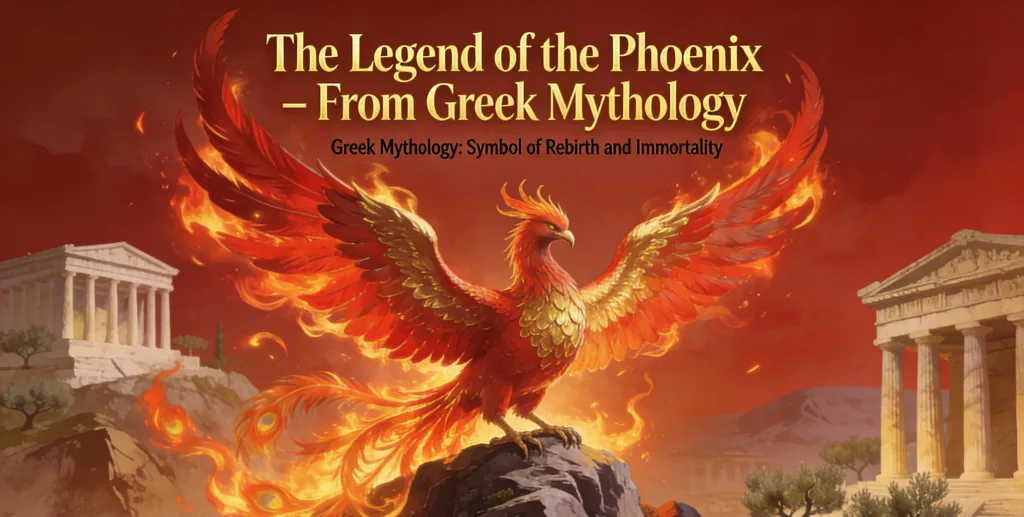
Have you ever heard of the phoenix? It comes from an ancient Greek myth. Simply put, it’s a giant bird with extraordinary longevity that burns itself to ashes and then rises anew from its own remains. Doesn’t that sound a bit like magic?
The tale of this bird was first recounted by Herodotus, an ancient Greek historian. During his travels in Egypt, he heard locals speak of this creature. He described it as appearing only once every 500 years, resembling an eagle but adorned in stunning red and gold plumage. Most astonishingly, it would place its deceased parents inside an egg made of myrrh (a highly fragrant resin) and fly to the Temple of the Sun in Egypt for burial. Hmm, I can’t help but wonder—Herodotus himself surely never saw one, so how did he know such detailed accounts? Most likely, it was just “gossip” he heard!
Later, another scholar named Pliny the Elder also wrote about the phoenix. He approached it with more “scientific” rigor. Beyond describing its beautiful colors and long lifespan, he focused on how it “dies” and is reborn. He said that nearing the end of its life, the phoenix gathers various spices and herbs—like frankincense and myrrh—to build a nest as large as a small mountain. Then, perched atop it, it would sing a song both profoundly sorrowful and exquisitely beautiful. And then, the miracle occurred! The nest would spontaneously ignite, reducing the phoenix to ashes. Yet from those very ashes, a brand-new, fluffy little phoenix would emerge!
Hold on—do you actually believe this story?
Why did ancient people love telling phoenix stories so much?
Actually, ancient tales of the phoenix weren’t just about some strange animal. They conveyed a profound truth: about life, death, and hope.
You see, for us ordinary people, life seems like a one-way street: we’re born, grow up, age, and eventually die—no turning back. But the phoenix is different! Its life is a circle, not a straight line. It shows us that an ending isn’t truly over—it’s the prelude to a new beginning. Like the sun, which “dies” every night as it sinks below the horizon; yet every morning, it “comes back to life,” rising anew to bring light and warmth. The phoenix is the embodiment of this sun—a flying sun in the heavens!
So for the ancient Greeks and Romans who constantly pondered “what happens after death,” the phoenix was nothing short of a superhero. It offered humanity immense hope: death isn’t terrifying, because a better rebirth might follow. It feels like when you play a game, your character dies, but you can reload the save and start over—maybe even come back stronger!
Goodness, imagine how wonderful life would be if it truly worked like that!
The Phoenix’s Modern Lessons
Honestly, when I first read the phoenix legend, what struck me most wasn’t its dazzling flames, but the concept that it “must die once to be reborn.” That makes perfect sense!
In life, we often encounter those “messy situations.” Like when you write an article and keep revising it without satisfaction, or when you work on a project only to realize it was fundamentally flawed from the start. At times like these, many people find it hard to let go, always trying to patch things up and force the old stuff to keep working. But what does the phoenix teach us? It says: “Stop fixing it! Just burn it down!”
Yes, sometimes the bravest, smartest move is to completely abandon what no longer works. Let it vanish entirely, reduced to ashes. Only then can you make space for truly great new things born from fresh ideas. Those old ashes have actually become the fertilizer for new life.
So next time you feel like you’ve messed things up, don’t lose heart. Think of that brave phoenix. Your “failure” might just be the necessary fire you must pass through before your next “success.” This isn’t the end—it’s merely the warm-up before your victory.