




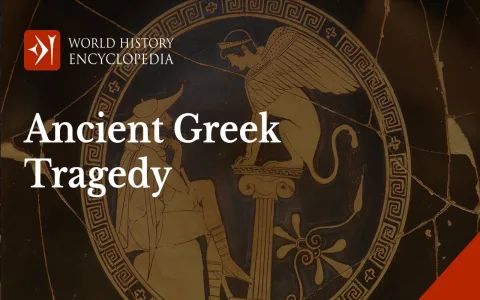
I. Starting with a Film: My First Encounter with Sophocles.
Several years ago, I watched a modern film—its exact title has faded from memory, but the feeling that “no matter how hard you try, fate always sneers behind your back” lingered. A friend casually remarked, “Isn’t this just a Sophoclean tragedy?” It stunned me.
How could someone living in the 5th century BC so precisely capture the spiritual predicament of modern people? Curiosity drove me to the library. Instead of delving into weighty academic commentaries, I picked up a popular translation of Oedipus Rex. I wanted to experience for myself: what magic did he use to make suffering feel so powerful?
II. More Than the “Father of Tragedy”: He Redefined Drama.
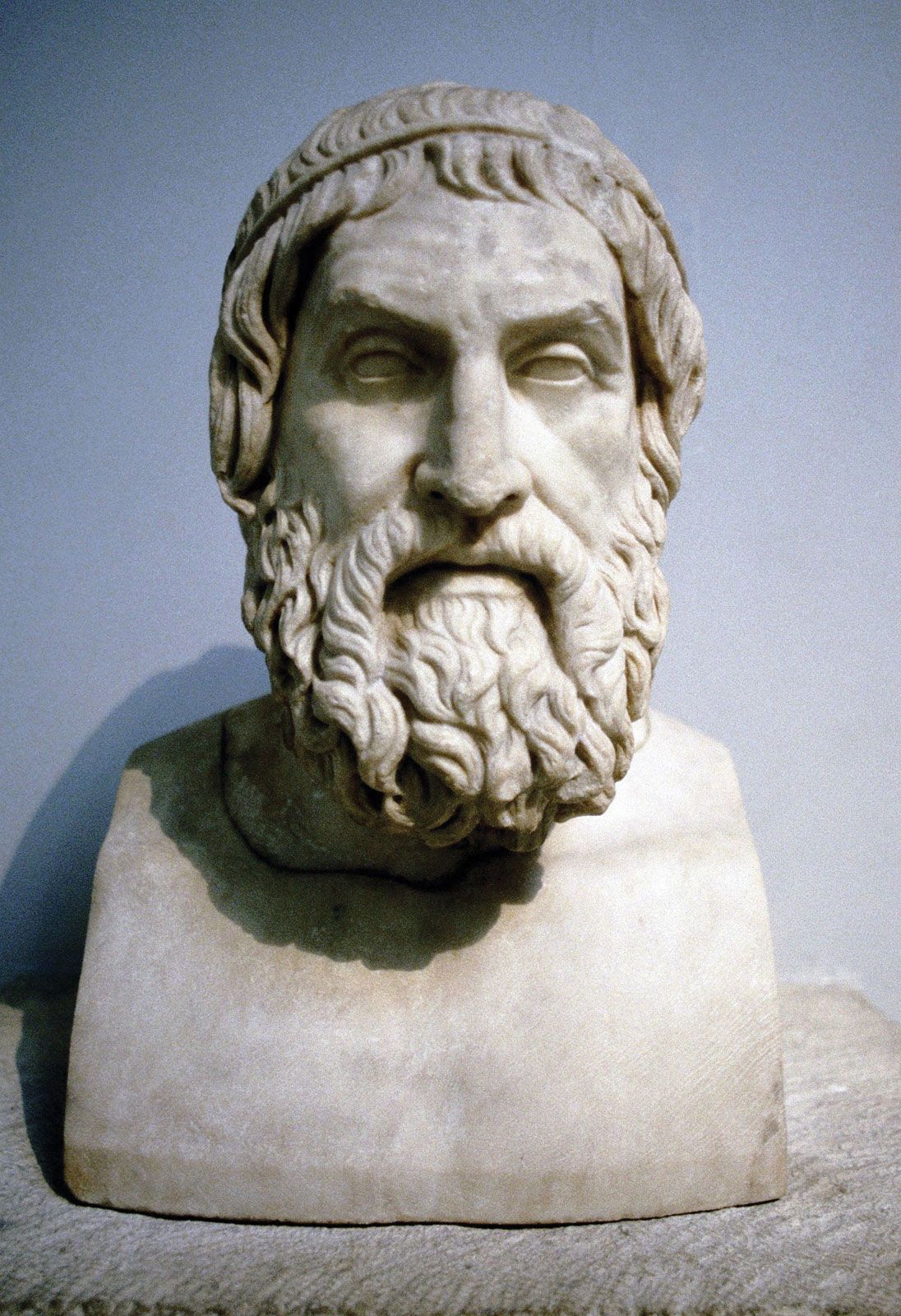
Sophocles (c. 496–406 BC) is often broadly categorized as one of the “Three Great Tragedians of Ancient Greece,” but his innovations extend far beyond literary labels. He fundamentally altered the DNA of drama:
- Introduced a third actor: Previously, plays featured only two-person dialogues. He added a third character, transforming conflicts from simple oppositions into multi-layered entanglements, making dialogue far more dynamic.
- Diminished the chorus’s “omniscient perspective”: The chorus ceased to narrate from above, instead becoming integrated into the plot—a sounding board for the city-state’s collective emotions, even posing philosophical questions.
- Focused on individual struggles: His protagonists weren’t puppets of divine oracles, but flawed mortals with wills of their own who made mistakes. Their “hubris” is not sin, but an inherent part of humanity.
- Strict adherence to “unity of action”: The plot unfolds layer by layer around a single core event, culminating in an irreversible climax—once the gears of fate begin to turn, there is no turning back.
These changes, while seemingly technical, fundamentally shift the drama from ritual to psychology, from collective myth to individual destiny.
III. The Profound Meaning of Sophocles.
Sophocles’ name in Greek signifies “the glory of wisdom” (sophos + kleos), yet the “wisdom” in his works stems not from divine revelation or cunning, but from clarity forged through suffering. He proposes a profound attitude toward life: Though humans cannot control fate, they can decide how to face it.
In his tragedies, “meaning” lies not in happy endings, but in how heroes respond to irresistible fate with dignity, morality, and will. This “Sophoclean hero”—who acts despite knowing the futility, retaining nobility even in defeat—became the archetype for countless literary characters. It is precisely this stance of choosing to persist amid despair that allows his stories to resonate powerfully across 2,500 years.
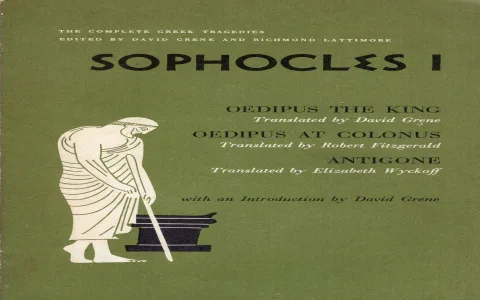
IV. Oedipus Rex: The Fear Lies Not in the Outcome, but in the Journey.
My first reading of Oedipus Rex was like binge-watching a thriller—I devoured it in one sitting. The king investigates the plague’s cause, only to discover the culprit is himself—he killed his father and married his mother. Shocking!
But upon rereading, I truly grasped the chorus’s role. They aren’t background noise; they echo the audience’s inner voice. When Oedipus shouts, “I will find the true culprit,” and we know each step leads him toward self-destruction, that dramatic irony (Sophoclean irony) pierces the heart.
The crux lies not in the shock of “he married his mother,” but in his enduring goodness—his integrity, decisiveness, and advocacy for the people. Yet the universe cruelly declares: “The harder you strive, the deeper you fall.” This mismatch between good intentions and fate is the tragedy’s core.
V. Antigone: When Law Clashes with Divine Justice.
If Oedipus Rex depicts man’s struggle against fate, Antigone directs its spearhead at earthly order. The maiden Antigone defies the king’s decree, insisting on burying her rebellious brother’s body—arguing that “the laws of the gods surpass those of men.”
Here, there is no simple right or wrong. Creon embodies state rationality, while Antigone represents familial and sacred duty. Sophocles takes no side, instead letting these two convictions collide violently, ultimately plunging both into the abyss. His question may be: When loyalties fracture, whom should we heed?
VI. His Heroes Are Never Flawless.
Sophocles’ protagonists all bear a “hamartia”—often mistranslated as “fatal flaw,” but more accurately described as “erroneous judgment” or “excessive fixation.” Oedipus’s problem wasn’t wickedness, but being too clever, too confident, too eager to control everything. His virtues became the fuse that ignited his downfall.
This complexity elevates characters beyond symbols, making them flesh-and-blood individuals. We empathize with them because we see ourselves reflected: we too have caused harm through well-intentioned actions, paid the price for holding fast to convictions.
VII. Why read him today?
Because Sophocles writes not myths, but psychological maps of humanity confronting an uncontrollable world. He offers no answers, only dilemmas: When truth is painful, do you flee or confront it? When rules clash with conscience, which side do you choose?
His works deliver a “catharsis”—not sorrow, but a cleansing of our numbness toward fate through empathy and dread.
After reading Oedipus Rex, you won’t just want to lie back and relax. Instead, you’ll think more clearly: within limited freedom, how can one live with dignity?
Conclusion: Ancient stories, eternal resonance.
I’m currently comparing his work with Euripides’ Electra. Shared mythology, yet the former resonates like bronze bells—deep and resonant—while the latter plucks silver strings—urgent and probing the psyche’s depths. But Sophocles always makes fate’s weight suffocating—yet within that suffocation, we glimpse humanity’s faint light.This may be why he’s called the “Father of Tragedy”: He teaches us that true tragedy isn’t destruction, but choosing to stand tall amidst it.

Comment on “Sophocles Meaning: The Father of Tragedy and His Mythological Legacy”